
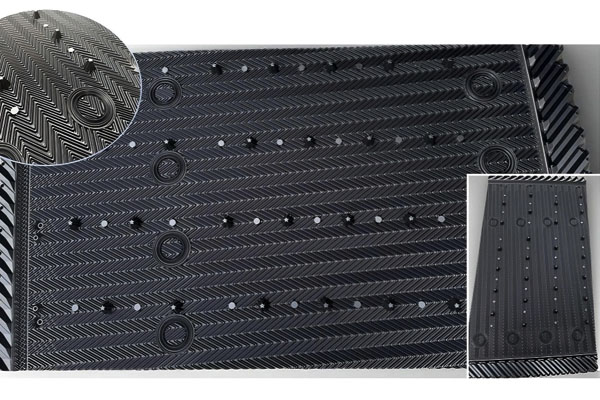
As industrial facilities continue to imp
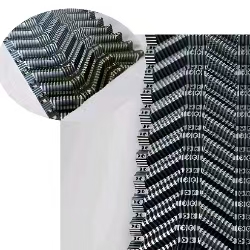
Selecting suitable cooling tower fill me
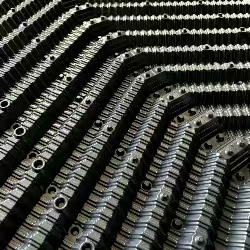
How Cooling Tower Fill Design Affects En
When cooling tower fill begins to deform, shift, or lose its original alignment, the material is often blamed first. Contractors may suspect insufficient sheet thickness, poor manufacturing quality, or an unsuitable plastic formulation.
These factors can certainly contribute to fill failure. However, the supporting arrangement deserves equal attention.
Even correctly manufactured cooling tower fill can develop problems when the load is transferred through unsuitable supporting points or when the installation method does not match the intended fill structure.
Cooling tower fill must maintain its position while exposed to operating loads and continuous water flow.
Depending on the tower design, fill may be installed on supporting beams, suspended from rods, or assembled into modules that rest on a supporting framework.
Each arrangement transfers loads differently.
In a hanging system, the connection points must support the installed fill arrangement without creating excessive local stress.
In a supported system, the contact area and spacing of the supporting members influence how the fill load is distributed.
Problems arise when a replacement product is selected without checking how the original fill was supported.
Some cooling tower fill products offer different assembly or connection options.
For example, cooling tower fill with glue or hang connection provides options that can be evaluated according to the tower's installation requirements.
However, the availability of different connection methods does not mean they can be substituted without checking the supporting structure.
Glued assemblies and hanging arrangements require different considerations regarding module construction, installation sequence, and load transfer.
The manufacturer should confirm that the selected product configuration is appropriate for the intended installation method.
Several visible conditions may indicate that the support arrangement requires inspection.
These symptoms do not automatically prove that the supporting system is responsible. Material aging, excessive operating temperature, chemical exposure, and mechanical damage should also be investigated.
Nevertheless, replacing the fill without examining the supporting arrangement may allow the same problem to return.
The internal structure of cooling tower fill influences how individual sheets are assembled and how the completed module behaves under load.
Corrugation pitch and orientation affect contact patterns between adjacent sheets. The resulting assembly must remain compatible with the selected support method.
For crossflow applications, multi-width glue/hang dual-purpose cross-flow fill can be considered where the project requires suitable dimensional and connection options.
Before ordering, contractors should confirm the intended assembly method, support spacing, and installation orientation.
It is particularly important to avoid assuming that panels with similar external dimensions will behave identically under the same supporting conditions.
For replacement projects, photographs of the existing support arrangement can be more useful than a product name alone.
Contractors should provide drawings showing supporting beam positions, hanging rod locations where applicable, available installation dimensions, and the approximate arrangement of fill modules.
If the existing structure has experienced repeated deformation, the damaged locations should also be identified.
For projects involving specific width requirements, products such as 870mm width cooling tower fill with flexible connection options can be reviewed against the installation design.
Not every cooling tower fill failure begins with the fill material itself.
Supporting structures, connection methods, and installation arrangements can strongly influence the condition of the completed fill system.
Before purchasing replacement material, contractors should determine whether the original failure resulted from material deterioration, unsuitable operating conditions, or inadequate structural support.
This approach helps prevent repeated replacement work and supports more reliable long-term operation.
Industry trends and cooling tower fill media insights for global customers.
As industrial facilities continue to improve energy efficiency and equipment reliability, cooling to
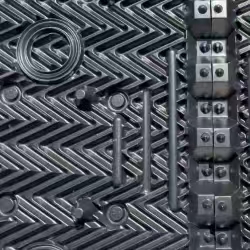
Cooling Tower Fill Support Problems That Are Often Mistaken for Poor Fill QualityWhen cooling tower
Connect with our team for cooling tower fill media details, project information, and technical assistance.
Chat on WhatsApp