
As industrial facilities continue to imp
Selecting suitable cooling tower fill me
How Cooling Tower Fill Design Affects En
For cooling tower engineers and industrial users in tropical regions, selecting the right Cooling Tower Fill is not only about improving cooling performance. It is also closely related to energy consumption, water circulation efficiency, and long-term operating costs. In Southeast Asia, the Middle East, and other hot regions, cooling towers often operate under high ambient temperatures, humidity, dust, and heavy industrial loads. Under these conditions, fill design can have a significant influence on overall tower performance.
Many cooling tower problems are not caused by the fan, pump, or water system alone. An unsuitable cooling tower media design can also contribute to poor heat transfer and higher operating costs. A properly selected film fill cooling tower system can improve water distribution, increase air-water contact, and help the tower achieve stable cooling performance without creating unnecessary airflow resistance.
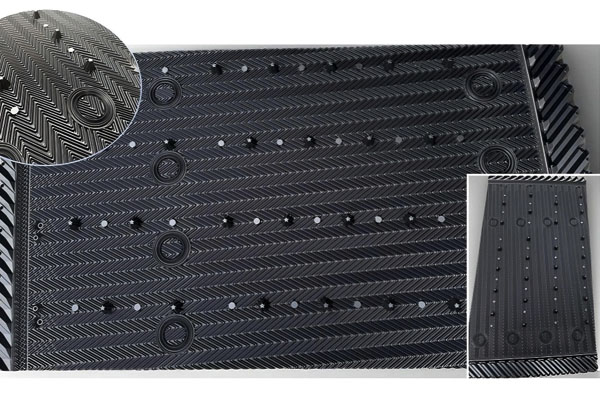
Cooling tower fill is the main heat exchange component inside a cooling tower. Its job is to spread the circulating water and create a large contact surface between air and water. During this process, part of the water evaporates and removes heat from the circulating system.
Modern tower fill designs normally use structured sheets or blocks with specific surface patterns. These structures help control water movement and improve air-water contact. The better the water spreads through the available fill area, the more effectively the cooling tower can use its installed fill volume.
Film Fill is widely used because it provides a large heat transfer surface within a relatively compact installation space. When water quality and operating conditions are suitable, film fill cooling tower designs can provide strong thermal performance.
For example, 1520 Width Cooling Tower Fill can be considered for projects where the available installation dimensions require a specific fill width. The actual selection should always be based on tower configuration and site measurements.
In tropical and hot regions, cooling towers may face high ambient temperatures, dust, biological growth, and changing water quality. These conditions can gradually affect both fill performance and maintenance requirements.
For power plants, chemical factories, refineries, and manufacturing facilities, the cooling tower fill needs to provide reliable heat transfer while remaining suitable for the actual water and temperature conditions. Engineers should consider water quality, operating temperature, airflow, fill dimensions, and maintenance requirements before selecting the correct tower fill.
For demanding applications, the fill structure and material should be selected according to the actual operating environment rather than simply choosing the lowest purchase price.
A product such as Multi-width Glue/Hang Dual-purpose Cross-flow Fill can be useful when a replacement project requires flexibility in installation method and fill dimensions.
For hotels, shopping malls, office buildings, and commercial air-conditioning systems, energy efficiency, stable operation, and maintenance convenience are usually important considerations. A suitable Film Fill structure can help make better use of the available tower space while maintaining effective air-water contact.
Choosing the correct material is another important factor when purchasing cooling tower fill. Different operating environments can require different material properties.
For standard applications, PVC can provide a practical balance between performance and cost. For more demanding industrial environments, engineers should evaluate whether a more chemically resistant material is appropriate.
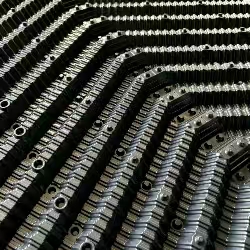
The structure of cooling tower fill directly affects water spreading, airflow resistance, and heat transfer performance. Common designs include corrugated sheet structures, crossflow patterns, and splash structures.
For crossflow applications, products such as 1500mm Width Cooling Tower Fill may be selected when the existing tower requires a wider fill configuration.
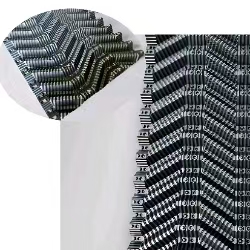
Corrugated Fill uses structured surfaces to change the direction of water and improve contact between water and air. A well-designed structure can provide a useful balance between heat transfer performance and airflow resistance.
This balance becomes especially important in large cooling towers because unnecessary pressure loss can increase the operating burden on the fan system.
Before purchasing cooling tower fill, engineers should check several important specifications:
Choosing the cheapest cooling fill is not always the best solution. A difference in material, structure, dimensions, or airflow resistance can affect long-term operating performance and replacement costs.
Every cooling tower project has different requirements. Standard sizes may not always match an existing tower, especially during replacement work. Professional cooling tower fill manufacturers can provide customized solutions based on block dimensions, thickness, spacing, and installation conditions.
For customers replacing existing fill, accurate tower measurements and photographs can help confirm whether a standard product or customized Film Fill solution is more suitable.
Even high-quality cooling tower media requires regular maintenance. Proper maintenance can help maintain cooling efficiency and extend service life.
Regular inspection is particularly important in hot and dusty environments, where contamination can gradually restrict water and airflow through the fill.
Cooling tower fill is a relatively small component, but its design has a major influence on cooling system performance. For tropical and industrial environments, selecting the correct material, structure, dimensions, and airflow characteristics can help improve heat transfer and control long-term operating costs.
When selecting Cooling Tower Fill, engineers should consider the complete operating environment instead of focusing only on the initial purchase price. The right Film Fill Cooling Tower solution should match the actual tower, water conditions, airflow requirements, and installation space. For replacement projects, providing existing fill dimensions and site photographs to the manufacturer before ordering can make the selection much more accurate.
Industry trends and cooling tower fill media insights for global customers.
As industrial facilities continue to improve energy efficiency and equipment reliability, cooling to
Winter Operation: Cooling Tower Fill Challenges and Cold-Weather AdaptationsWhy Winter Changes the R
Connect with our team for cooling tower fill media details, project information, and technical assistance.
Chat on WhatsApp