
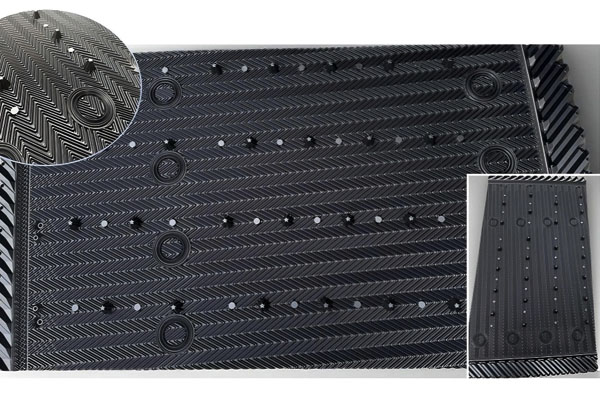
As industrial facilities continue to imp
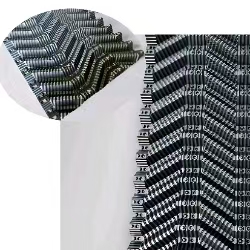
Selecting suitable cooling tower fill me
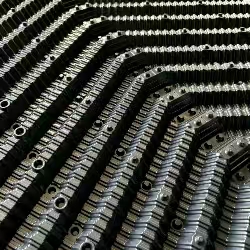
How Cooling Tower Fill Design Affects En
In many industrial cooling systems, choosing the right cooling tower fill material is often overlooked. Some customers focus mainly on cooling capacity, tower size, or fan performance, but the material of the Cooling Tower Fill can directly affect service life, maintenance frequency, and long-term operating costs.
For industries such as chemical plants, power stations, steel factories, oil refineries, and manufacturing facilities, cooling towers often operate continuously under difficult conditions. High temperature, chemical exposure, poor water quality, and outdoor environments can quickly reduce the performance of unsuitable cooling tower media.
A professional cooling tower engineer will consider the operating environment before selecting a fill material. PVC, PP, and other polymer materials have different characteristics, so understanding the actual water and temperature conditions is important when choosing a reliable cooling solution.
Cooling tower fill material is the internal heat transfer component installed inside a cooling tower. Its main function is to increase the contact area between air and water, allowing heat to be removed through evaporation and air movement.
Modern tower fill products are usually manufactured as structured sheets or blocks. The surface design helps spread water, maintain air passages, and improve cooling efficiency.
Different materials are selected according to the application environment. PVC and PP are two of the most common options.
PVC is widely used in cooling tower applications because it provides a good balance between performance and cost. PVC Cooling Tower Fill offers stable structure and is suitable for many general industrial and commercial cooling systems.
For HVAC systems, commercial buildings, and general industrial cooling towers, PVC is often a practical choice when water conditions and operating temperatures are within the suitable range.
For replacement projects, products such as 16.5 Multi-width Cross-flow Fill can be considered when the existing tower requires a specific crossflow configuration.
Polypropylene (PP) is increasingly used in demanding industrial applications because it offers good chemical resistance and can be suitable for more challenging water conditions.
For chemical processing, coastal facilities, or systems with more aggressive water conditions, PP Cooling Tower Fill may provide a more suitable long-term solution.
The final material selection should be based on actual water chemistry, temperature, and operating requirements rather than material price alone.
Power plants require cooling towers to operate continuously with stable performance. Fill materials must handle high water flow rates, temperature changes, and long operating periods.
In these applications, engineers should consider material stability together with the Film Fill structure, airflow conditions, and required heat transfer performance.
Chemical plants often have more complex water conditions. Chemicals, suspended particles, and higher temperatures may affect unsuitable fill materials.
In these cases, material resistance becomes an important selection factor. A suitable fill structure combined with the correct material can help improve cooling system reliability.
Commercial cooling systems usually have cleaner water conditions and focus more on energy efficiency, stable operation, and maintenance convenience.
PVC Film Fill products are commonly considered where the operating conditions are suitable and economical replacement is important.
Material selection is only one part of cooling tower performance. The fill structure also affects water distribution, airflow, and heat transfer.
Film Fill Cooling Tower systems use structured sheets to create a large water contact surface. This design can provide high heat transfer efficiency when water quality and operating conditions are suitable.
Common applications include:
Not every cooling tower should automatically use film fill. Systems with dirty water, suspended solids, or higher fouling risks may require an open fill structure that is easier to maintain.
The appropriate fill type should therefore be selected according to actual water quality and maintenance conditions.
Before ordering cooling tower media, customers should check:
Many replacement problems happen because customers only measure the old fill without checking whether its material and structure are still suitable. A professional supplier should review both the existing dimensions and operating conditions before recommending a replacement.
Industrial cooling towers are not always standard designs. Different tower manufacturers and projects may require different fill dimensions, widths, or installation arrangements.
Customized Cooling Fill can be produced according to confirmed project requirements, including block dimensions, sheet thickness, and assembly method.
For replacement projects, customers can provide existing fill dimensions, drawings, or photographs. This allows the manufacturer to determine whether a standard product or customized solution is more appropriate.
No matter which material is selected, regular maintenance is necessary to maintain cooling efficiency and service life.
Good maintenance also helps customers determine whether the existing Cooling Tower Media needs cleaning, partial replacement, or complete replacement.
The best cooling tower fill material is not necessarily the most expensive option. The correct choice depends on water quality, operating environment, cooling requirements, and maintenance conditions.
For normal applications, PVC Cooling Tower Fill can provide a practical balance between performance and cost. For more demanding environments, PP Cooling Tower Fill may offer better chemical resistance. Before placing a replacement order, providing the tower dimensions and existing fill information can help ensure that the selected Cooling Tower Fill actually matches the application.
Industry trends and cooling tower fill media insights for global customers.
As industrial facilities continue to improve energy efficiency and equipment reliability, cooling to
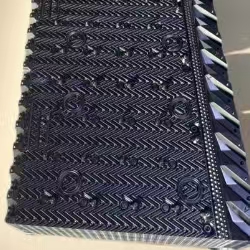
Winter Operation: Cooling Tower Fill Challenges and Cold-Weather AdaptationsWhy Winter Changes the R
Connect with our team for cooling tower fill media details, project information, and technical assistance.
Chat on WhatsApp