
As industrial facilities continue to imp
Selecting suitable cooling tower fill me
How Cooling Tower Fill Design Affects En
Cooling towers installed in coastal areas often face more challenges than systems located in normal industrial environments. High humidity, salt air, dust, algae growth, and unstable water quality can gradually reduce cooling performance. For customers in Southeast Asia, the Middle East, and other coastal regions, selecting the correct Cooling Tower Fill and maintaining it properly are important steps to keep the cooling system running efficiently.
Many cooling tower owners only notice problems when the outlet water temperature becomes higher than expected or when energy consumption starts increasing. However, experienced engineers usually check the cooling tower media condition first because the fill directly affects air-water contact and heat transfer.
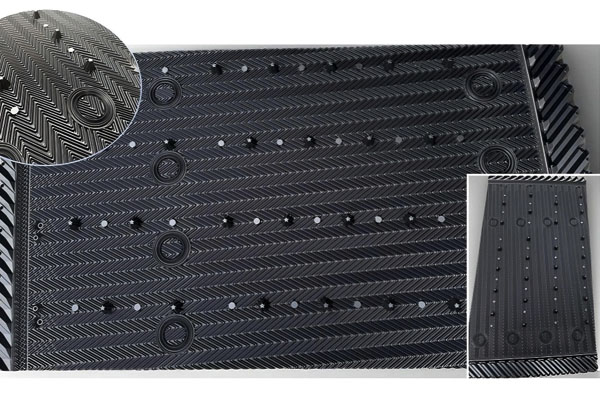
A suitable Film Fill cooling tower design, combined with the correct material and regular maintenance, can significantly improve system reliability even under difficult coastal operating conditions.
Cooling towers in coastal regions are exposed to special conditions that can shorten the service life of internal components. Salt particles in the air, high temperatures, and biological contamination can affect the performance of tower fill over time.
Coastal factories often experience salt mist entering the cooling tower system. Although modern plastic materials provide good resistance, unsuitable materials may become brittle or lose mechanical strength after long-term exposure.
For these environments, engineers should select the fill material according to actual water and operating conditions. A suitable structure such as Cross-flow Cooling Tower Fill (Double-wave Design) can be considered when the tower requires a crossflow fill configuration with appropriate water and air passage characteristics.
Countries in Southeast Asia often have high ambient temperatures and humidity throughout the year. These conditions increase the workload of cooling towers and require efficient heat transfer inside the tower.
A properly selected 750/930mm Cross-flow/Counter-flow Fill can be used according to the tower type, available installation space, and existing fill arrangement.
One of the most common problems is blockage inside the fill structure. Dust, algae, mud, and suspended particles can accumulate between fill sheets, reducing airflow and water distribution.
When airflow becomes restricted, the cooling tower loses efficiency and the fan may need to work harder. This increases electricity consumption and operating costs.
For replacement projects, an open or appropriately structured fill should be selected according to the actual water quality rather than simply copying the original product.
Low-quality tower fill materials may deform after years of exposure to temperature changes and chemical conditions. Once the structure changes, water cannot spread evenly and cooling performance decreases.
High-quality Cooling Tower Media should maintain stable shape during long-term operation. Material selection, sheet thickness, and manufacturing quality all influence service life.
Sometimes the cooling tower itself is not damaged, but the installed fill is not suitable for the working condition. For example, using a fill structure that is too difficult to maintain in a dirty-water system may create repeated blockage problems.
Professional engineers usually evaluate:
For coastal power plants, chemical factories, and industrial facilities near the sea, the fill material and structure should be selected according to chemical exposure, water quality, temperature, and expected service conditions.
A properly matched Cooling Tower Fill can help reduce premature deformation and unnecessary replacement costs.
PVC remains a popular choice for many HVAC systems and standard industrial applications. It provides a good balance between price and cooling performance when the operating conditions are suitable.
For replacement projects, products such as 1010mm × 2500mm Cross Flow Fill for Cooling Tower Applications can be considered when the existing tower requires a specific block configuration and installation size.
The correct fill structure depends on the water condition, cooling requirements, tower type, and maintenance conditions.
Film fill designs create a thin layer of water across the surface area, providing efficient heat transfer when water quality is suitable.
Products such as 870mm Width Cross-flow Fill can be considered for crossflow replacement projects where the existing tower requires a specific fill width.
Splash-type designs may be suitable for applications where water contains more suspended solids or where easier cleaning and maintenance are important.
The final selection should be based on actual water quality and cooling requirements rather than simply choosing the most common fill type.
When replacing old cooling tower fill, customers should not only measure the existing dimensions. Engineers should also check the actual operating condition.
Replacing with the same product without understanding the original problem may lead to repeated failures.
Many coastal cooling towers have been operating for many years. During replacement projects, standard products may not always perfectly match the existing tower.
Professional manufacturers can provide customized Cooling Fill according to customer requirements, including block size, material selection, thickness, and installation method.
Customers can provide existing fill dimensions, drawings, or photographs before ordering. This allows the manufacturer to confirm whether a standard product or customized solution is more suitable.
Regular maintenance can greatly extend the life of cooling tower fill in coastal environments.
Regular inspection also helps determine whether the existing Cooling Tower Media needs cleaning, partial replacement, or complete replacement.
Cooling towers in coastal areas require more careful selection and maintenance compared with standard installations. Material quality, fill structure, dimensions, and operating conditions all influence the final cooling performance.
By selecting the correct Cooling Tower Fill, customers can reduce maintenance frequency, improve cooling efficiency, and achieve longer equipment service life. For challenging replacement projects, providing the tower dimensions, existing fill specifications, and site photographs to a professional manufacturer before purchasing can make the final solution much more accurate.
Industry trends and cooling tower fill media insights for global customers.
As industrial facilities continue to improve energy efficiency and equipment reliability, cooling to
Winter Operation: Cooling Tower Fill Challenges and Cold-Weather AdaptationsWhy Winter Changes the R
Connect with our team for cooling tower fill media details, project information, and technical assistance.
Chat on WhatsApp