
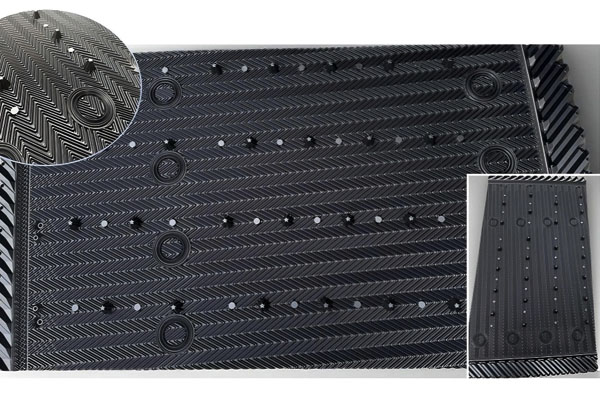
As industrial facilities continue to imp
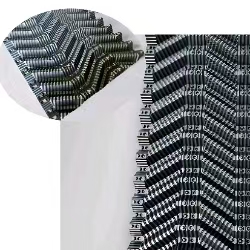
Selecting suitable cooling tower fill me
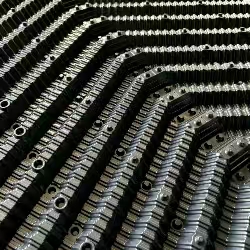
How Cooling Tower Fill Design Affects En
Hard water is one of those cooling tower problems that can develop quietly. The tower may continue running normally, while minerals gradually build up on the Cooling Tower Fill and reduce the effective surface area available for heat transfer.
At first, the change may be difficult to notice. As deposits become heavier, however, water distribution and airflow can be affected, eventually leading to higher outlet water temperature and reduced cooling performance. Mineral scaling and deposits are recognized causes of fill fouling and efficiency loss.
When circulating water contains high levels of dissolved minerals, evaporation inside the cooling tower can concentrate those minerals. Deposits may gradually form on the fill surface and inside its passages.
This is particularly important for Film Fill because its closely spaced channels provide high heat-transfer performance but can also become restricted when scaling develops.
Scale covers part of the fill surface and changes the way water spreads across it. The available contact area between water and air can therefore decrease, reducing heat transfer efficiency.
As deposits continue to accumulate, some passages may become partially blocked. This can interfere with water movement and airflow, making it harder for the tower to maintain its original cooling performance.
If hard water is combined with suspended solids or frequent fouling, engineers should not look only at thermal efficiency. Maintenance and blockage resistance also need to be considered.
For applications where an open structure is preferred, Splash Grid Fill for Cooling Tower Applications can be considered as an alternative fill structure.
A scaled fill does not always mean that the entire cooling tower fill must immediately be replaced. Engineers should first check water chemistry, deposit severity, water distribution, airflow, and the physical condition of the fill.
For replacement projects involving larger installation dimensions, products such as 1520 Width Cooling Tower Fill may be considered according to the existing tower structure.
Improving water treatment is important, but the fill itself must still match the operating conditions. A suitable structure can help balance heat transfer performance, water distribution, and resistance to fouling.
For specific replacement requirements, 1200mm Double-Ripple Cooling Tower Fill is another configuration that can be evaluated according to the tower dimensions and application.
Hard water rarely damages Cooling Tower Fill overnight. The bigger problem is the gradual accumulation of scale that quietly reduces heat-transfer area and restricts water and airflow.
Before replacing scaled fill, customers should identify the cause of fouling and confirm the actual operating conditions. This helps determine whether cleaning, water-treatment improvement, or a different Cooling Tower Fill structure is the more practical solution.
Industry trends and cooling tower fill media insights for global customers.
As industrial facilities continue to improve energy efficiency and equipment reliability, cooling to
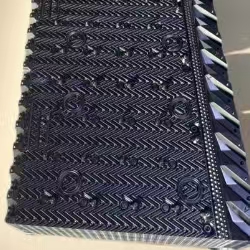
Winter Operation: Cooling Tower Fill Challenges and Cold-Weather AdaptationsWhy Winter Changes the R
Connect with our team for cooling tower fill media details, project information, and technical assistance.
Chat on WhatsApp